
The Premium That Stays After the Loan Ends
Your final car payment cleared three years ago. You drive 6,000 miles a year now that you're retired. Your renewal notice arrived yesterday and the premium barely changed, still carrying collision and comprehensive at the same rate you paid when the vehicle was new and financed. The lender required full coverage then. No one requires it now, but your carrier kept billing and you kept paying.
This article addresses the coverage question carriers and general insurance sites handle poorly: whether collision and comprehensive still justify their cost once a vehicle is paid off, lightly driven, and depreciating into its second decade. The law permits you to drop them. The decision framework is yours.
Compare rates from carriers that specialize in senior drivers
Mature driver discounts, low-mileage rates, and coverage reviews — see what you're actually eligible for.
Get Your Free QuoteTexas Property Damage Minimum
$25,000
Texas requires $25,000 property damage liability per accident under state financial responsibility law. Liability protects others' vehicles and property when you're at fault; it does not repair your own car. Collision and comprehensive cover your vehicle, and both are optional the moment your lien releases.
Texas Transportation Code Chapter 601
What Full Coverage Actually Means
Full coverage is an industry marketing term, not a legal category. It typically bundles liability insurance, collision coverage, and comprehensive coverage. Liability is legally required in Texas. Collision and comprehensive are not.
Collision coverage pays to repair your vehicle after an accident regardless of fault, minus your deductible. Comprehensive coverage pays for non-collision losses: theft, hail, vandalism, animal strikes, flood. Both coverages pay up to your vehicle's actual cash value at the time of loss, not replacement cost or what you paid originally.
When your vehicle was financed, the lender contractually required both coverages to protect their collateral interest. Once the title clears and you own the vehicle outright, that contractual obligation ends. Texas law does not require you to insure your own vehicle. You are required to carry liability minimums to protect others. Whether you insure your own asset is a judgment call based on vehicle value, your financial position, and replacement capacity.
Your carrier will not notify you when collision and comprehensive stop being cost-effective. They renew automatically. The coverage decision sits with you.
The Coverage-Fit Calculation
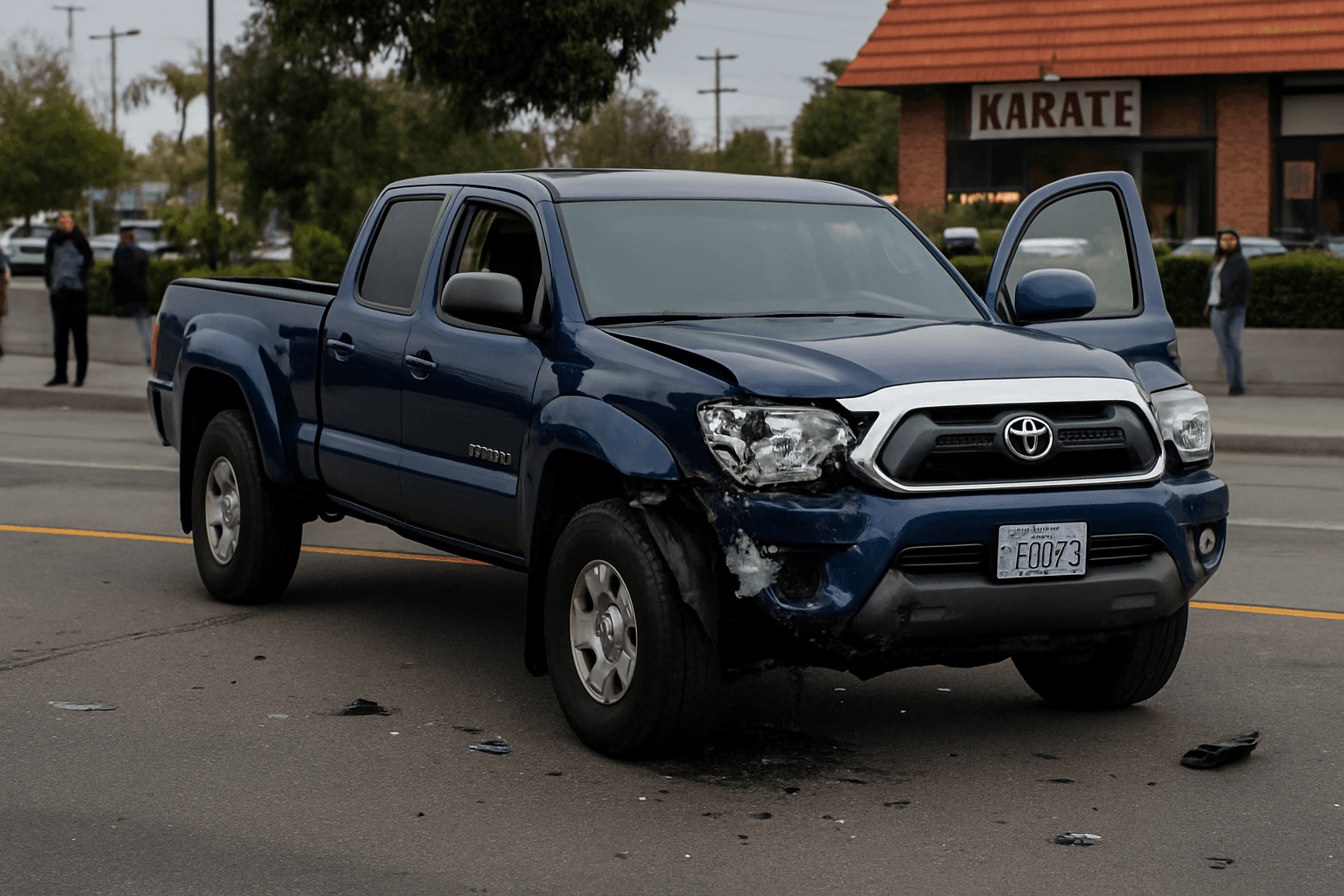
Pull your current declaration page or renewal notice. Find the six-month or annual premium line items for collision and comprehensive. Add them together, then multiply by two if you're looking at a six-month term. That total is your annual cost to insure your own vehicle. Now look up your vehicle's actual cash value using NADA Guides, Kelley Blue Book, or Edmunds. Use the private-party or trade-in value, not retail. Retail reflects dealer markup; actual cash value reflects what the vehicle would sell for between private parties or what an insurer would pay you after a total loss.
A common rule of thumb: if your combined annual collision and comprehensive premium exceeds ten percent of your vehicle's actual cash value, the coverage is expensive relative to the asset it protects. Some retirees set the threshold lower, at five percent, particularly when the vehicle is paid off and a total-loss check would not leave them unable to replace it. The threshold is not regulatory; it's a financial judgment call about whether you're paying more to insure the vehicle than the vehicle justifies.
Related Articles



What Happens If You Drop Both Coverages
If you drop collision and comprehensive and keep liability at Texas minimums or higher, your policy remains legal and active. You will still carry valid proof of insurance. Your liability coverage continues to protect you if you cause an accident that damages someone else's vehicle or property. What changes is this: if your vehicle is totaled in an accident you cause, stolen, or damaged by hail, you receive no insurance payment for your own vehicle. You pay out of pocket to repair it or replace it.
If another driver causes the accident and carries liability insurance, their property damage coverage pays for your vehicle's repair or its actual cash value if totaled. Your own collision coverage would have been redundant in that scenario. Collision becomes valuable when you cause the accident, when the other driver is uninsured or underinsured, or when the accident is single-vehicle with no other party to pursue.
Comprehensive losses are unrelated to fault. Hail, theft, vandalism, and animal strikes happen without another driver involved. If you drop comprehensive, those losses are uninsured. Whether that risk is acceptable depends on your financial position, your vehicle's value, and your area's exposure. San Antonio sees periodic hail events and vehicle theft. If your vehicle is worth $4,000 and comprehensive costs $180 annually with a $500 deductible, you're paying nearly five percent of the vehicle's value to cover a loss that would net you $3,500 after the deductible. Some retirees accept that risk and bank the premium instead.
Raising Deductibles as a Middle Path
If you're uncertain whether to drop collision and comprehensive entirely, raising deductibles reduces premiums without eliminating coverage. Standard deductibles run $250, $500, or $1,000. Choosing a $1,000 deductible over $250 means you self-insure the first $1,000 of any covered loss, and the carrier pays only claims exceeding that threshold. Higher deductibles lower premiums because the carrier's exposure shrinks.
For a lightly driven paid-off vehicle, a $1,000 deductible often makes sense. You avoid small nuisance claims that can trigger rate increases at renewal, and you retain catastrophic coverage for total losses. The deductible applies per incident: if hail totals your vehicle and its actual cash value is $5,000, you receive $4,000 after the $1,000 deductible. If the repair estimate is $800, you pay it yourself and file no claim.
Run a premium comparison through your current carrier or during your next quote cycle. Request quotes at $250, $500, and $1,000 deductibles for both collision and comprehensive. Compare the annual premium difference against the deductible increase. If raising the deductible from $250 to $1,000 saves you $200 annually, you recover the deductible difference in under four years of claim-free driving. Many retirees find that math favorable.
Carriers Writing in Texas
25
Twenty-five carriers in the Texas data layer write personal auto policies in the state, spanning standard, preferred, and non-standard market tiers. Not all handle retiree profiles or low-mileage vehicles equally well. Comparing coverage options and premium structures across three to five carriers during your next renewal cycle clarifies which treat your profile most favorably.
Texas auto insurance carriers by state data
Medical Payments and Liability Fit
When retirees evaluate coverage on paid-off vehicles, the collision and comprehensive question dominates. Two other coverages deserve attention during the same review: medical payments coverage and your liability limits. Medical payments coverage pays medical bills for you and your passengers after an accident, regardless of fault, up to the policy limit. Many Texas policies carry $2,000 or $5,000 in medical payments coverage. Medicare is your primary health insurer as a retiree; medical payments coverage coordinates as secondary.
Medicare Part A and Part B cover accident-related injuries the same way they cover other medical events, subject to deductibles and copays. Medical payments coverage from your auto policy can cover those out-of-pocket costs, but only up to the policy's medical payments limit. If your policy carries $2,000 in medical payments coverage and your accident-related Medicare copays total $400, the auto policy pays the $400. Whether $2,000 or $5,000 in medical payments coverage justifies its premium depends on your Medicare supplement situation and your household's financial capacity to cover the gap.
Liability limits protect your retirement assets if you cause an accident. Texas requires $30,000 per person and $60,000 per accident in bodily injury liability, plus $25,000 in property damage liability. Those minimums were set decades ago. A serious at-fault accident today can generate medical bills and vehicle damage exceeding $60,000 easily. If the injured party sues and wins a judgment above your policy limit, your personal assets are exposed. Many retirees carry $100,000 per person, $300,000 per accident, and $100,000 property damage. Some carry $250,000 or $500,000 per accident. The premium difference between state minimums and higher limits is often smaller than the collision premium you're evaluating, and the liability exposure is greater.
Compare Before You Drop
Pull your current declaration page. Write down your vehicle's year, make, model, and current actual cash value. Write down your current annual premium for collision, comprehensive, and total policy cost. Then request quotes from three carriers writing in Texas that handle retiree and low-mileage profiles. Request quotes with and without collision and comprehensive, and request quotes at multiple deductible levels. State your annual mileage honestly: if you drive 6,000 miles annually, that figure affects your risk profile and your premium.
Carriers including State Farm, GEICO, Progressive, and USAA write personal auto policies in Texas and offer online quoting tools. Compare not only the premium but also how each carrier structures discounts for low mileage, mature drivers, and policy longevity. Some carriers reduce premiums for drivers who complete a state-approved defensive driving course; others offer usage-based programs that monitor mileage electronically and adjust premiums accordingly. The comparison step clarifies whether your current carrier treats your profile competitively or whether switching saves you more than dropping collision and comprehensive would.