
When the Loan Ends, the Coverage Question Begins
Your renewal notice arrived and full coverage on the 2014 Camry sitting paid-off in your driveway costs $847 every six months. The loan ended two years ago. Your neighbor mentioned she dropped collision and comprehensive after her final payment and her premium dropped by half. You called your agent and got vague reassurance that keeping everything is safer. The question remains unresolved: does full coverage still make financial sense when no lender requires it and you drive 4,200 miles a year?
This article walks the actual math retirees in Arlington face when the paid-off milestone turns mandatory coverage into a judgment call. Texas does not require collision or comprehensive on any vehicle regardless of value or age. What you are paying for is replacement or repair coverage on an asset whose value drops every year while the premium often climbs. The decision framework centers four retirement-specific factors: the vehicle's actual cash value right now, your annual full-coverage premium, the collision deductible you carry, and whether your retirement assets are exposed in an at-fault accident if you raise liability limits instead.
Compare rates from carriers that specialize in senior drivers
Mature driver discounts, low-mileage rates, and coverage reviews — see what you're actually eligible for.
Get Your Free QuoteTexas Property Damage Minimum
$25,000
Texas liability minimums are $30,000 per person, $60,000 per accident bodily injury, and $25,000 property damage. Retirees with retirement accounts or home equity often carry higher liability limits because those assets are exposed in an at-fault accident, but the state floor is the reference point for every coverage-fit decision.
Texas Transportation Code Chapter 601
Full Coverage Is Three Distinct Pieces, Two of Them Optional
Full coverage is not a product insurers sell as a package. The term describes three separate coverages purchased together: liability insurance, collision coverage, and comprehensive coverage. Liability insurance is mandatory in Texas and pays the other driver's damages when you cause an accident. Collision pays to repair or replace your vehicle after a crash regardless of fault. Comprehensive coverage pays for non-collision damage: theft, hail, fire, vandalism, animal strikes. When a lender financed your vehicle, the loan contract required collision and comprehensive to protect their secured interest. Once you own the car outright, those two coverages protect only your asset, and you decide whether the annual cost justifies the protection.
Many retirees assume dropping collision and comprehensive leaves them uninsured. That is structurally incorrect. You remain insured for liability, which is the coverage Texas law requires and the coverage that protects your retirement assets in an at-fault accident. What you are evaluating is whether to continue insuring the vehicle itself for physical damage. The decision hinges on whether the vehicle's current value and your financial position make self-insuring that specific risk the better arithmetic.
The confusion often starts when agents frame the question as all-or-nothing. Dropping collision and comprehensive does not mean dropping coverage. It means shifting from insuring the vehicle's repair cost to raising liability limits or redirecting premium dollars toward other household priorities. For a retiree driving a paid-off 2014 sedan worth $6,800 at actual cash value and paying $1,694 annually for full coverage, the question is whether that $1,694 buys $6,800 worth of protection or funds two years of home repairs, property tax, or Medicare supplement premiums instead.
The blocker is informational: your renewal notice shows the total premium but never breaks out what collision and comprehensive cost separately or what your vehicle is worth right now in a total-loss settlement.
Four Factors That Bend the Paid-Off Vehicle Math
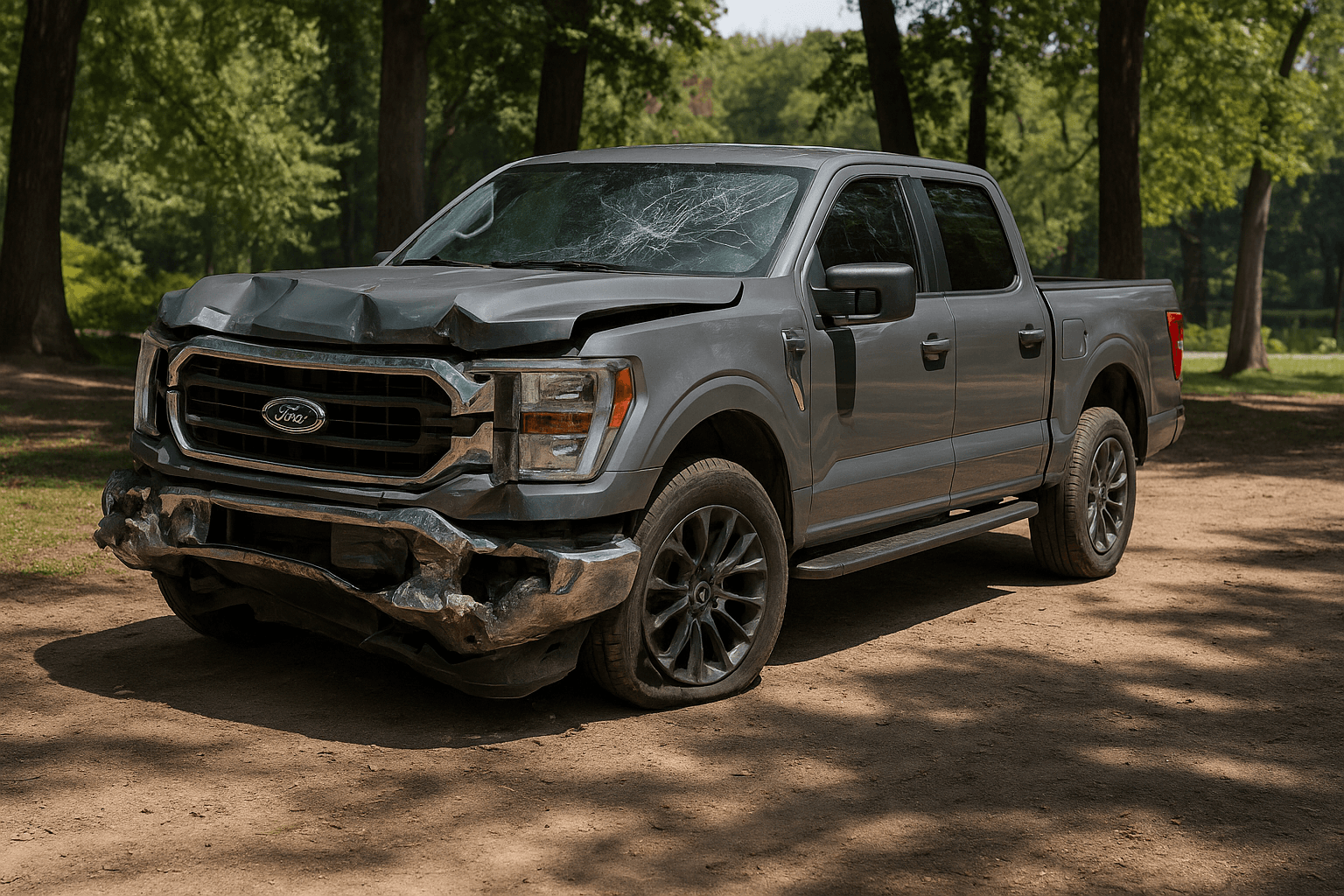
First factor: actual cash value versus annual premium. Call your insurer and ask what they would pay in a total-loss settlement today, not what the car was worth new or what you paid for it. Insurers settle total losses at actual cash value, which is market value adjusted for age, mileage, and condition. If that figure is $6,800 and your annual full-coverage premium is $1,694, you are paying 25 percent of the vehicle's value every year to insure it. A conventional threshold many retirees use is 10 percent: when annual premium exceeds 10 percent of actual cash value, collision and comprehensive often cost more than the coverage justifies. That threshold is not a rule; it is a heuristic reflecting diminishing return as premiums track upward while vehicle value declines.
Second factor: collision deductible relative to repair cost. Your collision deductible is what you pay out of pocket before the insurer pays anything. If your deductible is $1,000 and a fender repair costs $1,400, the insurer pays $400. If the deductible is $1,000 and the vehicle's actual cash value is $6,800, you are self-insuring the first $1,000 of every collision claim and paying annual premium to cover the gap between $1,000 and $6,800. Many retirees discover the gap is smaller than the cumulative premium cost and choose to self-insure the entire amount rather than paying annually for marginal coverage. Third factor: whether you have accessible savings to replace the vehicle without financing. If losing the car tomorrow means taking a loan or depleting an emergency fund you cannot rebuild, collision coverage remains valuable regardless of premium-to-value ratio. If you can replace the vehicle from accessible savings without financial strain, the premium buys protection you may not need.
Related Articles


What Happens When You Drop Collision and Comprehensive
When you remove collision and comprehensive from your policy, your premium drops by the amount those coverages cost. Most insurers in Texas will provide a breakdown by coverage type if you ask your agent or call the service line directly. Expect the premium reduction to range from 40 to 60 percent of your total full-coverage cost, depending on your vehicle, driving record, and the deductibles you carried. Your liability coverage remains in place at whatever limits you select, and you remain insured for bodily injury and property damage you cause to others.
You are no longer insured for physical damage to your own vehicle. If you cause an accident, liability pays the other driver's damages but your car is not repaired unless you pay out of pocket. If another driver causes the accident and carries liability insurance, their property damage coverage pays for your vehicle's repair or replacement up to their policy limit. If the at-fault driver is uninsured, uninsured motorist coverage can cover your vehicle damage only if you carry uninsured motorist property damage, which is optional in Texas and separate from collision. Many retirees assume collision covers all accident scenarios; it does not cover uninsured-motorist situations unless you added that specific endorsement.
Comprehensive claims disappear entirely once you drop the coverage. Hail damage, theft, vandalism, and animal strikes become your financial responsibility. Arlington sits in a hail-prone corridor and comprehensive claims for hail damage are common in Tarrant County. If your vehicle is garaged and you live in a low-theft ZIP code, comprehensive risk is lower than for a car parked on the street in a high-theft area. Many retirees keep comprehensive and drop collision, especially when comprehensive costs $150 annually and covers the hail risk they know is real. Texas insurers allow you to carry comprehensive without collision, though some apply a higher deductible when collision is removed.
Conventional Premium-to-Value Threshold
10%
A widely used rule of thumb among retirees is that when annual full-coverage premium exceeds 10 percent of the vehicle's actual cash value, collision and comprehensive often cost more than the financial protection justifies. The threshold is not statutory; it reflects diminishing return as vehicle value declines while premium trends upward.
Redirecting Premium Savings Into Liability Limits
Dropping collision and comprehensive frees premium dollars many retirees redirect into higher liability limits. Texas minimum liability is $30,000 per person and $60,000 per accident for bodily injury, and $25,000 for property damage. Those minimums were set decades ago and do not reflect current medical costs, vehicle values, or the financial exposure retirees with home equity and retirement accounts face in a serious at-fault accident. A single-vehicle accident sending two people to the emergency room can generate $150,000 in medical bills. If you carry state minimums and cause that accident, the excess $90,000 is your personal liability and creditors can pursue your assets.
Raising liability limits to $100,000 per person and $300,000 per accident, or $250,000/$500,000, typically adds $8 to $18 per month to your premium depending on your driving record and the carrier. That cost is a fraction of what collision and comprehensive cost on an aging vehicle. Many retirees in Arlington find that dropping collision saves $70 monthly and raising liability costs $12 monthly, producing a net $58 monthly reduction while increasing the protection that actually guards their retirement assets. The math reverses the all-or-nothing framing agents sometimes use: you are not reducing coverage, you are reallocating it from the vehicle to yourself.
Some carriers writing in Texas handle this transition more gracefully than others. USAA, State Farm, and Geico allow mid-term policy changes without penalty and provide clear breakdowns of per-coverage cost when you request a comparison quote. Acceptance Insurance and Dairyland, both non-standard carriers, often require a full re-quote rather than a simple coverage adjustment. If your current carrier makes the process difficult, the policy anniversary is the cleanest time to compare carriers and coverage structure simultaneously.
Compare Carriers and Coverage Structure Before Renewal
Your next step is a side-by-side comparison: your current full-coverage premium broken down by coverage type, versus liability-only quotes at higher limits from at least three carriers writing in Texas. Request actual cash value from your current insurer in writing so the figure is verified, not estimated. Ask each comparison carrier what raising liability to $100,000/$300,000 or $250,000/$500,000 costs, and whether they offer a low-mileage or usage-based program for retirees driving under 7,500 miles annually. Many carriers offer mileage-based discounts but do not apply them unless you ask and verify your odometer reading.
The comparison is not about finding the cheapest rate. The question is which carrier combination of liability limits, optional coverages, and discount structure fits your retirement driving profile and asset position. Some retirees keep comprehensive for hail protection and drop collision. Others drop both and raise liability to $500,000. The correct answer depends on your vehicle's value, your savings position, and your risk tolerance for self-insuring physical damage. No agent can answer that for you because no agent knows your complete financial picture or how you weight the trade-offs. The decision is yours; the article gives you the framework to make it with the actual numbers in front of you.