
The Paid-Off Car Premium Trap
You finished your last car payment six months ago, your daily commute ended when you retired, and your renewal notice arrived last week with the same premium you paid when the car was new. Your carrier didn't flag that the full-coverage math changed the day you stopped owing the bank. Most Austin retirees keep paying collision and comprehensive premiums that now exceed the car's annual depreciation, simply because no one told them the coverage became optional.
This article walks the specific decision: when full coverage still earns its cost on a paid-off vehicle driven under 8,000 miles annually, which carriers writing in Texas offer low-mileage and usage-based programs that drop premiums when your odometer confirms what you already know, and how medical-payments coverage interacts with Medicare once you're past 65. The framework applies to your actual position, not the generic advice written for 35-year-olds financing new sedans.
Compare rates from carriers that specialize in senior drivers
Mature driver discounts, low-mileage rates, and coverage reviews — see what you're actually eligible for.
Get Your Free QuoteTexas Property Damage Minimum
$25,000
Texas requires $25,000 property damage liability per accident, $30,000 bodily injury per person, and $60,000 bodily injury per accident. That minimum is the coverage floor; collision and comprehensive are optional once the lien holder releases the title.
Texas Transportation Code Chapter 601
What Full Coverage Actually Protects Now
Full coverage is collision plus comprehensive plus liability. Liability is required by Texas law and protects your retirement assets if you cause an accident. Collision pays to repair your car when you hit another vehicle or object. Comprehensive pays when your car is stolen, vandalized, or damaged by weather. Both collision and comprehensive are optional the moment the bank no longer has a security interest in the vehicle.
The confusion starts because most retirees hear "full coverage" as a binary: you either have it or you don't. In reality, you're deciding whether collision and comprehensive still deliver value proportional to their cost. A $500 collision deductible and a $500 comprehensive deductible on a car worth $5,000 means the carrier pays a maximum of $4,000 if you total the vehicle. If your annual collision premium runs $600 and your comprehensive premium runs $250, you're paying $850 per year to protect a shrinking asset that depreciates roughly $800 annually. After two years, the premiums exceed any realistic payout.
Liability coverage operates under different math. Texas minimums protect the other driver, not your car. If you cause an accident and the other party's medical bills and property damage exceed your liability limits, your savings, your home, and your retirement accounts are exposed. Retired drivers with decades of clean records sometimes carry only the state minimum, assuming their low mileage insulates them from catastrophic claims. It doesn't. A single intersection accident with multiple injuries can generate $200,000 in medical costs. Liability limits of $100,000 per person and $300,000 per accident are common among retirees who own assets worth protecting.
Your carrier will not call you when collision coverage costs more than your car's depreciation. That call is your responsibility, and it starts with knowing your vehicle's current market value.
The Vehicle-Value Breakpoint
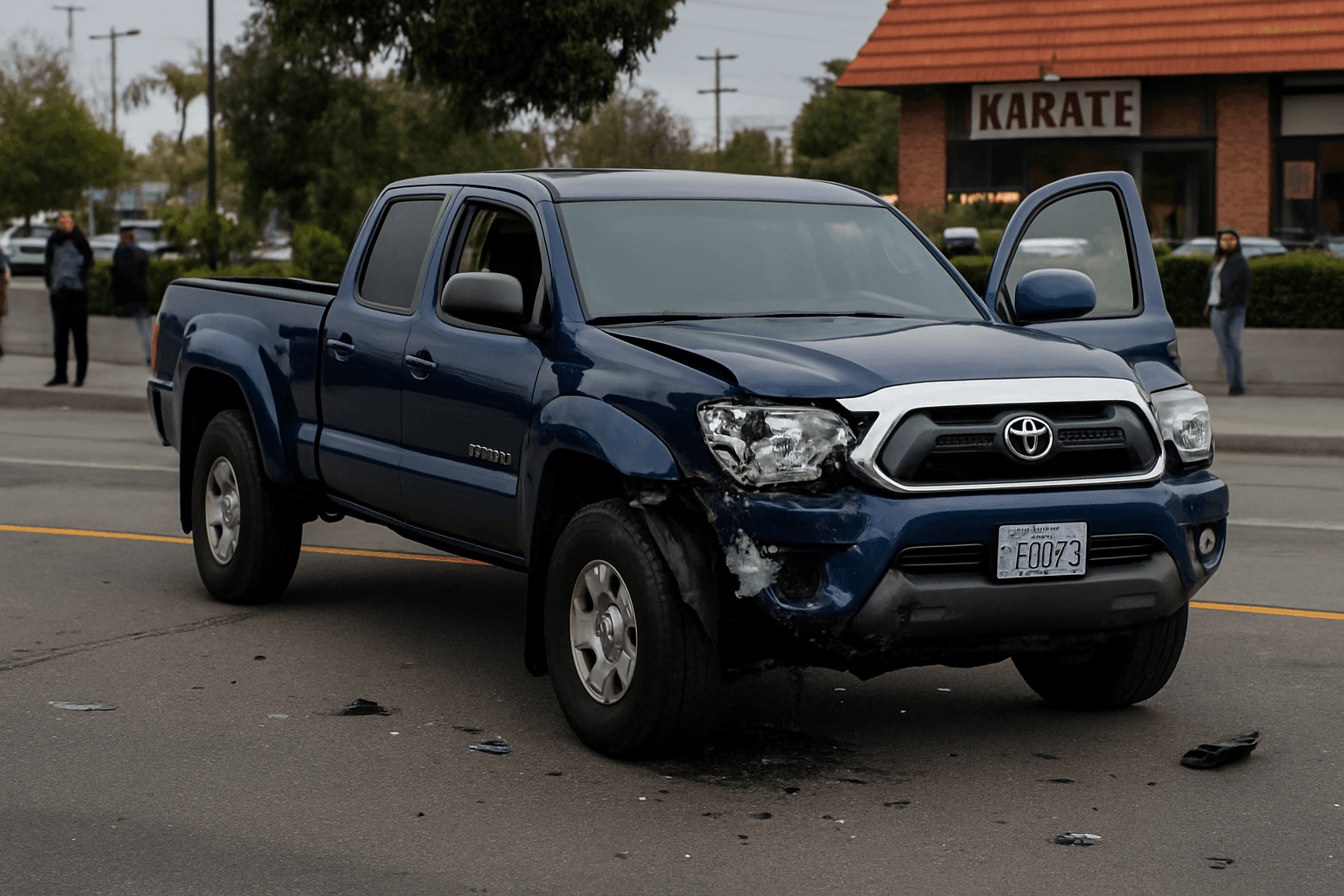
Start with your car's actual cash value, not what you paid or what you hope it's worth. Check Kelley Blue Book or NADA guides for your make, model, year, and mileage. Subtract your deductibles from that figure: if the car is worth $6,000 and you carry a $500 collision deductible and a $500 comprehensive deductible, the maximum combined payout is $5,000. Now compare that to your annual collision and comprehensive premiums. If you're paying $900 per year for coverage capped at $5,000, you're paying 18 percent of the car's value annually. In six years, you will have paid the equivalent of replacing the car in premiums alone, assuming zero claims.
The alternative is dropping collision and comprehensive, keeping liability at higher limits than the Texas minimum, and setting aside the premium savings in a dedicated account. If you were paying $900 annually for collision and comprehensive, that's $75 per month. After two years, you've saved $1,800. If you need a replacement vehicle, you already have a down payment. If you don't, the money stays in your account rather than the carrier's. This approach works only if you can absorb a total-loss event without financial distress. If losing the car means you cannot function, keep the coverage regardless of the ratio.
Related Articles





Low-Mileage and Usage-Based Programs in Texas
You no longer drive 15,000 miles annually. Your odometer confirms it. Most retirees in Austin drive between 5,000 and 8,000 miles per year: grocery runs, medical appointments, church, and occasional longer trips. Yet most pay premiums calculated for drivers covering twice that distance. Carriers writing in Texas offer two paths to align your premium with your actual mileage: low-mileage discounts and usage-based insurance programs.
Low-mileage discounts apply when you self-report annual mileage below a carrier-defined threshold, typically 7,500 or 10,000 miles. The carrier checks your odometer at renewal or requires a photo. Geico, Progressive, State Farm, and Nationwide all write in Texas and offer mileage-based rating. The discount percentage is set by each carrier's filed rates and verified at quote time; Texas does not mandate a specific low-mileage discount amount.
Usage-based insurance programs go further. Progressive's Snapshot, State Farm's Drive Safe & Save, Nationwide's SmartRide, and Allstate's Drivewise install a telematics device in your OBD-II port or use a smartphone app to track mileage, braking, acceleration, and time of day. If your driving pattern shows low annual miles, smooth braking, and avoidance of late-night trips, the program adjusts your rate downward at renewal. Participation is voluntary. The device does not prevent the car from starting or alert the carrier in real time; it collects data for rating purposes only.
Both paths require you to ask. Your carrier will not automatically re-rate your policy when your odometer stops climbing. At renewal, confirm your annual mileage with your agent, ask whether a low-mileage discount applies, and compare your current rate against a usage-based program quote. The comparison often reveals a gap of several hundred dollars annually, simply because the original policy rated you as a daily commuter and no one updated the assumption when you retired.
Carriers Writing in Texas
25
At least 25 carriers write personal auto policies in Texas, including Geico, Progressive, State Farm, Allstate, USAA, Nationwide, and Farmers. Not all offer mature-driver discounts or low-mileage programs; compare which carriers file senior-friendly rating structures before renewing with your current provider.
Texas Department of Insurance licensure records
Medical Payments and Medicare Coordination
Medical payments coverage, often listed as MedPay on your declarations page, pays your medical bills after an accident regardless of fault. It covers you, your passengers, and sometimes your family members injured while riding in another vehicle or struck as pedestrians. Limits typically range from $1,000 to $10,000. Personal injury protection, or PIP, is a broader version that includes medical costs, lost wages, and essential services; Texas does not require PIP, and most personal auto policies sold in the state do not include it.
Once you turn 65 and enroll in Medicare, the coordination question arises: does MedPay still serve a purpose when Medicare already covers hospitalization and physician services? The answer depends on timing and coverage gaps. Medicare Part A and Part B carry deductibles, coinsurance, and coverage limits. Part A has a deductible per benefit period; Part B charges 20 percent coinsurance on most services with no annual out-of-pocket cap unless you carry a Medigap plan. MedPay pays primary to Medicare in most cases, meaning it covers your deductibles and coinsurance before Medicare processes the claim. If your MedPay limit is $5,000 and your accident generates $8,000 in covered medical expenses, MedPay pays the first $5,000 and Medicare pays its share of the remaining $3,000, subject to its own deductibles and coinsurance.
The cost-benefit calculation is narrow. MedPay premiums in Texas typically run $30 to $80 annually for a $5,000 limit. If you already carry a Medigap plan that covers Medicare's deductibles and coinsurance, MedPay adds little. If you're on Original Medicare with no supplement, MedPay covers the gaps Medicare leaves. Compare your current Medigap or Medicare Advantage plan's out-of-pocket structure against your MedPay premium. If the premium is $50 annually and your Medicare deductible is $1,600, MedPay pays for itself in a single hospitalization. If your supplement already covers the deductible, drop MedPay and reallocate the premium.
Carriers That Handle Retiree Profiles Well
Not every carrier writing in Texas treats retiree profiles the same way. Some carriers offer mature-driver discounts only after completion of a state-approved defensive driving course; others offer age-based discounts automatically at 55 or 65. Texas law does not require carriers to offer a mature-driver discount, so the availability, trigger, and amount vary by carrier filing. USAA, State Farm, Geico, and Nationwide all write in Texas and offer mature-driver or defensive-driving discounts; the structure and percentage differ.
USAA restricts eligibility to military members, veterans, and their families, but offers competitive rates for older drivers with clean records and usage-based programs that reward low mileage. State Farm writes preferred-tier policies in Texas and files mature-driver discounts; the exact percentage is verified at quote time. Geico offers both low-mileage and mature-driver programs and provides online quoting. Progressive files usage-based Snapshot pricing and low-mileage rating. Each carrier's filed rates treat age, mileage, and vehicle value differently, so a side-by-side comparison on identical coverage reveals which carrier prices your actual risk most favorably.
The comparison step is manual. Call or quote online with at least three carriers writing in Texas. Provide identical coverage limits, the same vehicle, the same annual mileage, and your actual age. Ask each agent or online tool whether a mature-driver discount applies, whether completing an approved course changes the rate, and whether a low-mileage or usage-based program is available. Record the annual premium for liability-only and for liability plus collision and comprehensive. The spread between carriers often exceeds $400 annually on identical coverage, driven entirely by how each carrier's filed rates weight your age and mileage.
What To Do Right Now
Pull your current declarations page and identify your vehicle's year, your annual mileage, your collision and comprehensive deductibles, and your current premium. Look up your car's actual cash value using Kelley Blue Book or NADA. Subtract your deductibles from that value. Divide your annual collision and comprehensive premiums by the net insurable value. If the ratio exceeds 10 percent, you're likely overpaying for coverage that no longer matches the asset's worth. Call your agent and ask whether dropping collision and comprehensive makes sense given your driving pattern and financial position. If you decide to keep full coverage, ask whether your carrier offers a low-mileage discount or a usage-based program, and request a quote comparison on both. Compare your current MedPay coverage against your Medicare supplement plan's deductible and coinsurance structure. If your supplement already covers Medicare's gaps, drop MedPay and reallocate the savings. Finally, quote liability coverage at limits higher than the Texas minimum with at least two other carriers writing in the state to confirm your current rate still reflects your actual risk profile.