
The Renewal That Didn't Change
You made the final payment six months ago. The lien release arrived from the finance company, you filed it with the county, and the title now sits in your desk drawer with your name alone. The renewal notice landed last week and full coverage renewed automatically at $847 for six months, collision and comprehensive both checked, identical to the premium you paid when the bank required it. Nothing in the packet asked whether you still wanted collision on a 2016 Camry with 68,000 miles that you drive to the grocery store, the doctor, and church.
The carrier renewed the coverage because the policy configuration did not change when the lien vanished. Your agent received no automatic prompt to call you. The underwriting system saw a paid-off vehicle as a lower-risk asset, not a coverage-fit question. That question belongs to you, and the answer hinges on whether the annual collision premium justifies itself against what you would receive if the car were totaled tomorrow.
Compare rates from carriers that specialize in senior drivers
Mature driver discounts, low-mileage rates, and coverage reviews — see what you're actually eligible for.
Get Your Free QuoteTexas Property Damage Minimum
$25,000
Texas requires $25,000 property damage liability per accident under Transportation Code §601.072. That minimum protects the other driver's vehicle when you cause the accident; it does not repair yours. Collision coverage pays for your vehicle regardless of fault, but only if the annual cost makes sense against the car's current value.
Texas Transportation Code §601.072
What Collision Actually Pays on a Paid-Off Vehicle
Collision coverage reimburses actual cash value after depreciation, minus your deductible. A 2016 sedan in average condition with moderate mileage carries a market value between $10,000 and $14,000 in the Plano area as of current wholesale and retail data. If you selected a $500 deductible when the loan required collision, a total loss pays the value minus $500. If the vehicle is worth $12,000, the maximum check is $11,500.
Compare that ceiling against three years of collision premiums. If your current six-month collision premium is $320, the annual cost is $640. Over three years you pay $1,920 in premiums for a benefit capped at actual cash value, which declines every year. After three years the car is worth less and you have paid nearly 16 percent of its current value in collision premiums alone. The math shifts depending on how much you drive, where you park, and what other assets you hold, but the framework is identical: annual premium cost measured against declining reimbursement ceiling.
Comprehensive coverage follows the same cash-value limit but covers different risks: theft, vandalism, hail, flood, animal strikes. Plano sits in a region with periodic severe hail and higher vehicle theft rates than rural Texas counties. Comprehensive premiums run lower than collision in most cases, and the risks it covers do not correlate with your driving behavior. Many retirees drop collision and keep comprehensive when the vehicle is paid off, especially in areas with weather and theft exposure.
The lien release does not trigger an automatic coverage review. You hold a policy configuration designed for a financing requirement that no longer exists, and the carrier will renew it indefinitely unless you request the change.
When Full Coverage Still Earns Its Cost
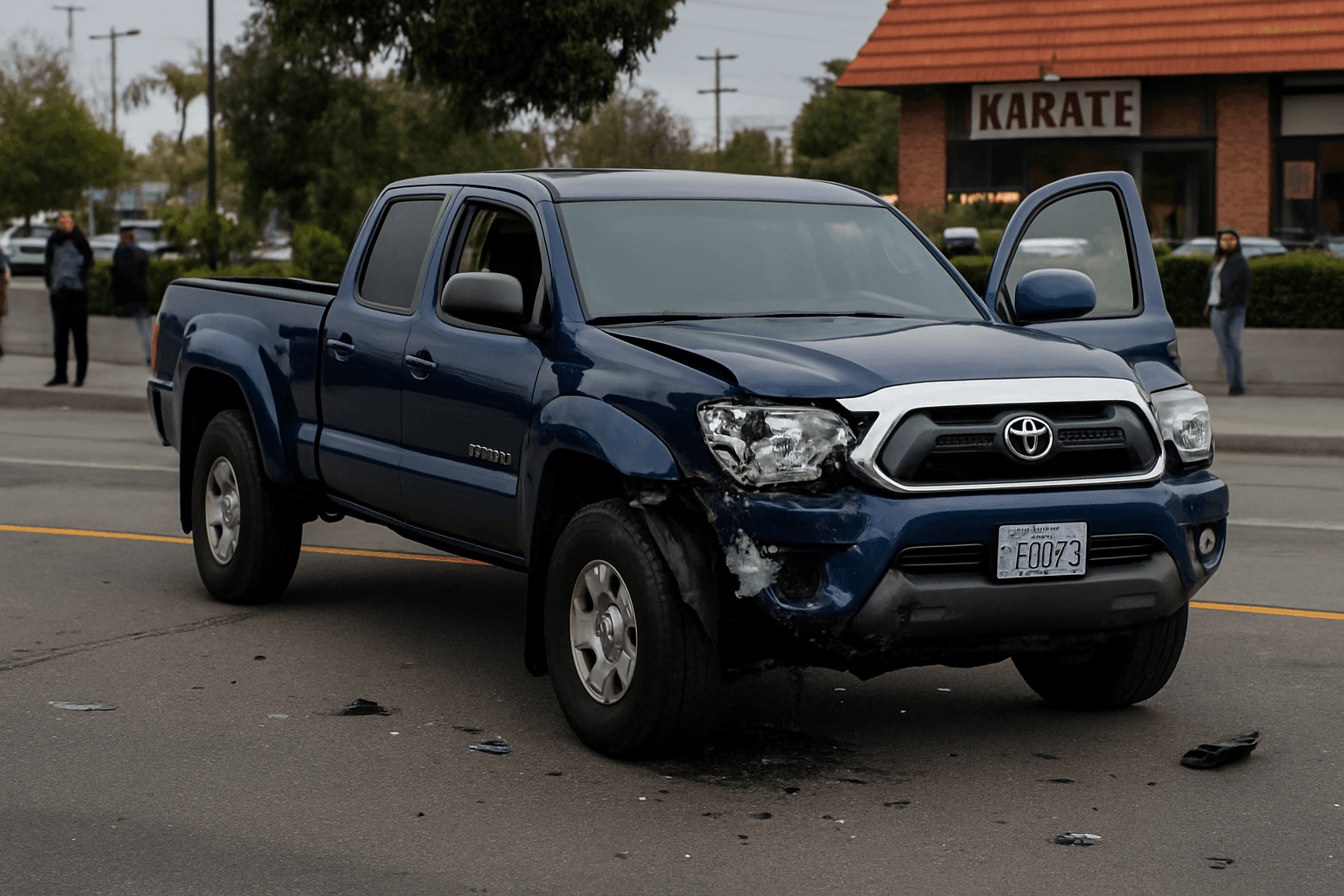
First, replacement cost versus liquid savings. If the vehicle were totaled and you lack $12,000 in accessible savings to replace it outright, collision coverage functions as your replacement fund. Retirees on fixed income with limited liquid reserves often keep collision longer than conventional wisdom suggests because losing the car without reimbursement leaves them unable to drive. The premium is a known recurring cost; the uninsured total loss is a financial crisis.
Second, high-value or low-depreciation vehicles. A paid-off 2020 truck worth $28,000 depreciates more slowly than a 2016 sedan, and the collision reimbursement ceiling remains higher for more years. The percentage test still applies, but the break-even timeline extends. Third, household exposure. If you hold significant retirement assets and live in a state where the at-fault driver can be sued beyond policy limits, liability coverage protects those assets in an accident you cause. Collision and comprehensive protect your vehicle; liability protects everything else you own. Dropping collision while carrying only Texas minimums exposes your retirement accounts and home equity to judgment risk in a serious accident.
Related Articles



Adjusting Coverage Mid-Term in Texas
You do not need to wait until renewal to drop collision or adjust your deductible. Texas law allows mid-term policy changes, and most carriers writing in the state process them within one business day. Contact your agent or the carrier's service line, state that you want to remove collision coverage or raise the deductible, and request the revised premium and effective date. The carrier will issue an endorsement and a pro-rated refund for the unused portion of the collision premium already paid.
Some carriers require the request in writing; others accept phone changes and send written confirmation afterward. USAA, State Farm, and Geico all process mid-term collision removal without waiting for the renewal cycle, and all three write policies in Plano. If the carrier requires a written request, email or their online portal satisfies the requirement. The refund check or account credit typically arrives within two billing cycles.
One procedural blocker: if you financed the vehicle recently and the lienholder has not yet filed the release with the carrier, the system still shows an active lien and will reject the collision-removal request. Verify with your agent that the lien release appears in the carrier's records before requesting the change. The finance company sends the release to you and separately notifies the carrier, but processing delays occur. If the carrier shows an active lien and you hold the signed release, fax or upload a copy to the underwriting department and request manual lien removal before changing coverage.
Carriers Writing in Texas
25
Twenty-five carriers in the data layer write policies in Texas and handle mid-term endorsements. Geico, Progressive, State Farm, USAA, Allstate, Nationwide, and Farmers all operate online portals where Plano policyholders can request coverage changes without waiting for an agent callback. Comparing which carriers offer the lowest liability-only or liability-plus-comprehensive rate after dropping collision gives you the post-payoff baseline.
Carrier licensing data, Texas Department of Insurance
Liability Limits After Dropping Collision
Dropping collision leaves liability as your primary financial protection. Texas requires $30,000 per person and $60,000 per accident for bodily injury, plus $25,000 property damage. Those minimums were set decades ago and have not adjusted for medical cost inflation or vehicle values. A two-car accident with injuries can generate $150,000 in combined medical bills and property damage, leaving you personally liable for the amount beyond your policy limits if you caused the accident.
Retirees with retirement accounts, home equity, or other assets face judgment risk when carrying only minimums. The at-fault driver's assets are exposed to lawsuit once policy limits are exhausted. Raising bodily injury liability to $100,000 per person and $300,000 per accident, and property damage to $50,000 or $100,000, costs less than continuing collision coverage on a paid-off vehicle in most cases. The annual premium increase for higher liability limits runs $80 to $150 depending on driving record and location; collision coverage on a $12,000 vehicle often exceeds $600 annually.
Medical Payments and Medicare Coordination
Medical payments coverage pays your medical bills after an accident regardless of fault, up to the policy limit you selected. Medicare covers many accident-related medical expenses for enrollees, but coordination rules determine which pays first. Medicare is ordinarily the secondary payer when other coverage exists, meaning your auto policy's medical payments coverage pays first up to its limit, and Medicare covers remaining eligible expenses.
If you carry a $5,000 medical payments limit and incur $18,000 in accident-related medical bills, the auto policy pays the first $5,000 and Medicare processes the remaining $13,000 under its standard rules. Dropping medical payments coverage entirely makes Medicare primary, but you lose the no-fault first-layer reimbursement for expenses Medicare does not cover or for which you face co-pays and deductibles. Many Plano retirees keep a $2,000 or $5,000 medical payments limit after dropping collision because the annual cost runs $25 to $60 and it closes the gap between the accident and Medicare's payment.
Compare Carriers Now That the Lien Is Gone
The financing requirement often locked you into the carrier the dealership recommended or the one your agent wrote the loan-required policy through. With the lien released, you can compare liability-only or liability-plus-comprehensive rates across the carriers writing in Plano without restriction. State Farm, USAA, Geico, and Progressive all offer online quoting for Texas liability policies, and all four write coverage for retirees with clean records. Farmers, Nationwide, and Allstate operate through agents but provide quotes within one business day.
Request quotes with the same liability limits across carriers so the comparison is structural, not coverage-mismatched. If you want $100,000/$300,000 bodily injury and $50,000 property damage with $2,000 medical payments and comprehensive coverage with a $500 deductible, submit that identical configuration to each carrier. The rate difference for the same coverage on the same vehicle with the same driver often exceeds $400 annually between the highest and lowest carrier. You now control the decision the lender once controlled.