
The Paid-Off Car Coverage Question
You made the final payment three years ago. The title arrived. Your car is yours, free and clear, and now the neighbor who dropped collision the day her loan ended says you're paying for coverage you don't need. Your renewal notice shows collision at $320 every six months and comprehensive at $140, and you're wondering whether she's right.
The question isn't whether the lender requires it anymore. The lender is gone. The question is whether the coverage still earns its premium against the risk of replacement cost if someone hits you in a parking lot or you're struck by an uninsured driver whose liability limit won't cover your car's value. Texas law requires liability only: bodily injury and property damage minimums of $30,000 per person, $60,000 per accident, and $25,000 for property damage. Collision and comprehensive are optional the moment the lienholder releases the title. What matters now is whether dropping them creates a gap your savings and household budget cannot close if the car is totaled.
Compare rates from carriers that specialize in senior drivers
Mature driver discounts, low-mileage rates, and coverage reviews — see what you're actually eligible for.
Get Your Free QuoteTexas Property Damage Minimum
$25,000
The at-fault driver's liability coverage pays for your vehicle damage up to their policy limit. If that driver carries only the state minimum of $25,000 and your car is worth $18,000, you recover the full value. If your car is worth $32,000 and they carry the minimum, you're short $7,000 unless your own collision coverage bridges the gap.
Texas Transportation Code Chapter 601
What Full Coverage Actually Protects
Full coverage is industry shorthand for a policy combining liability, collision, and comprehensive. Liability covers the other driver's vehicle and injuries when you're at fault. Collision covers your own vehicle repair or replacement cost after an accident, minus your deductible, regardless of fault. Comprehensive covers theft, hail, vandalism, flood, and animal strikes.
The loan requirement disappeared when you made the final payment, but the exposure did not. If an uninsured driver totals your paid-off $22,000 sedan and flees, your uninsured motorist property damage coverage steps in only if you purchased it and only up to the limit you selected. Without collision, you absorb the $22,000 loss yourself. The lender no longer has skin in the game. You do.
The coverage question is not whether the lender requires it. It's whether you can replace the vehicle tomorrow from savings if someone totals it tonight and carries no insurance or flees the scene.
When Collision Still Earns Its Premium
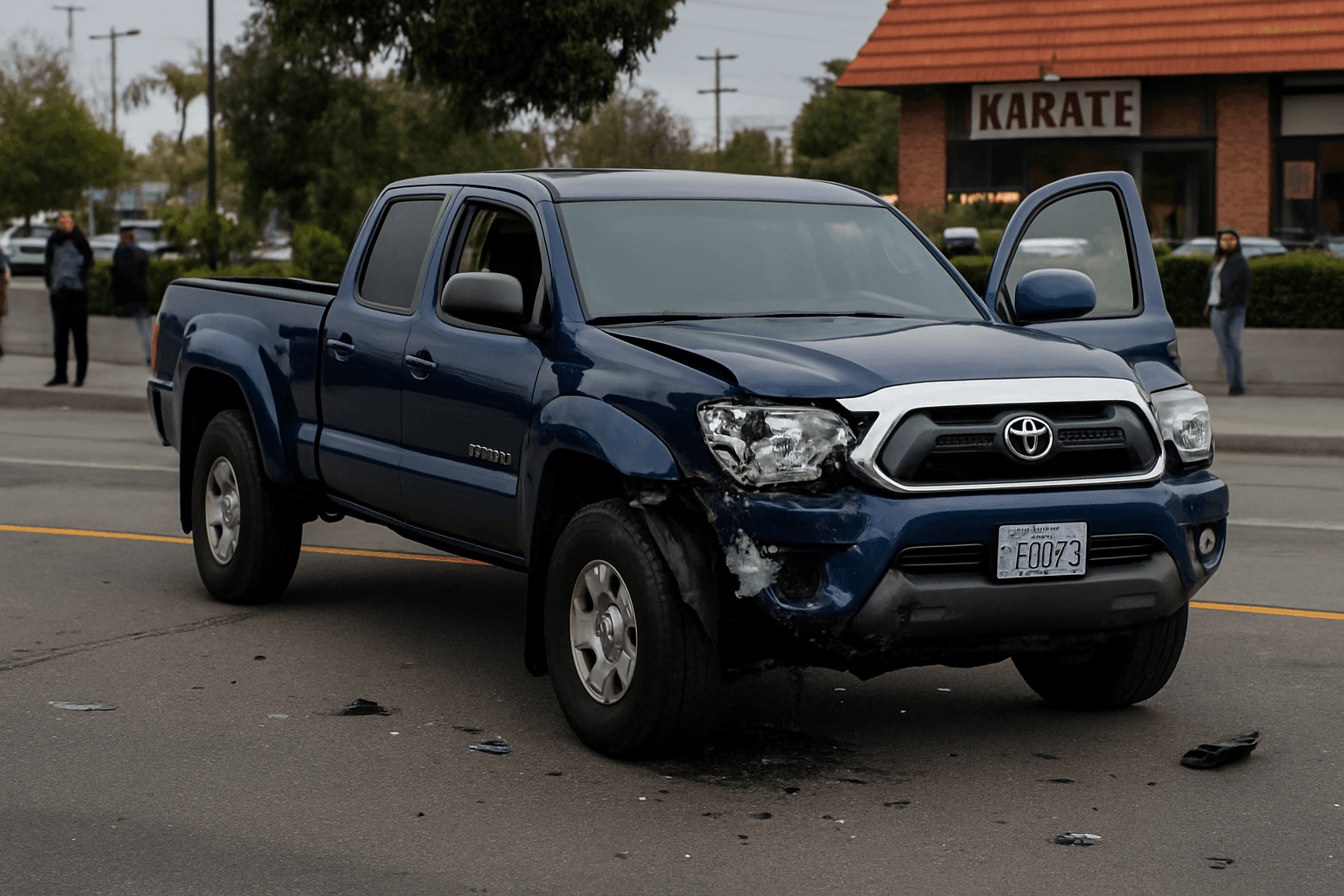
Start with current replacement cost: what you would pay tomorrow for the same year, make, model, and mileage if yours were totaled. Not what you paid in 2015. Not the tax assessor's value. Actual replacement cost in today's used market. Subtract your collision deductible. That net figure is what collision would pay if the car were totaled next week. Now calculate six months of collision premium. If your semiannual collision premium is $320 and your car's net replacement cost after the deductible is $14,000, you're paying $320 to insure $14,000 of exposure every six months.
Compare that $320 to what you have set aside in liquid savings specifically for vehicle replacement. Not retirement accounts. Not home equity. Cash or equivalents you can access within 72 hours to buy a replacement. If that reserve equals or exceeds net replacement cost, dropping collision shifts the risk to a reserve you already hold. If the reserve is $4,000 and replacement cost is $14,000, collision is covering a $10,000 gap your household budget cannot close without pain. The $320 premium every six months buys protection against a loss that would materially disrupt your financial position.
Related Articles


Houston Exposure: Uninsured Drivers and Weather
Houston sits in Harris County, where uninsured-driver rates run well above the state average and severe weather events—hail, flooding from tropical systems—are routine, not rare. An uninsured driver who runs a red light and totals your paid-off vehicle leaves you with two recovery paths: your own collision coverage, or a lawsuit against someone who carries no insurance and likely no recoverable assets. Collision closes the gap immediately. The lawsuit is a long-shot process that may never yield a check.
Comprehensive covers flood, hail, and theft. Gulf Coast proximity means flood risk persists even outside FEMA-mapped zones. A single severe hail event can total a vehicle if the damage density is high enough, and your comprehensive deductible, not your collision deductible, applies. Dropping comprehensive to save $140 every six months works only if you're prepared to self-fund a total loss from weather the day after you drop the coverage.
The paid-off status changes nothing about these exposures. The vehicle's value and your household's ability to replace it from reserves are what matter. If reserves fall short and you drive daily, collision and comprehensive remain the most cost-effective hedge against a loss that would force an unplanned $15,000 to $25,000 outlay within a week.
Standard-Tier Texas Carriers
22 carriers
Twenty-two standard and preferred-tier carriers write auto insurance in Texas and offer collision and comprehensive as optional coverages. Rates vary significantly by carrier, deductible selection, and senior-discount eligibility. Comparing collision premiums across carriers while holding deductible constant often uncovers a lower-cost path to the same protection.
Carrier licensing data, Texas Department of Insurance
Deductible Strategy for Retirees
Raising your collision deductible from $500 to $1,000 typically cuts the collision premium by 20 to 30 percent without eliminating the coverage. If your semiannual collision premium at a $500 deductible is $320, moving to $1,000 might drop it to $240, saving $160 annually. The trade: you pay the first $1,000 of repair cost out of pocket instead of the first $500. If you file a claim once every five years on average, the higher deductible saves you $800 over that period while increasing your out-of-pocket exposure by $500 per claim.
This strategy works when you have $1,000 in liquid savings set aside specifically for the deductible but lack the $18,000 to self-insure the entire vehicle. The deductible becomes a planned, controllable expense. The total-loss risk remains transferred to the carrier. Retirees with stable household budgets and modest emergency reserves often find the higher-deductible path strikes the right balance: lower premium, retained protection against catastrophic loss, and a predictable out-of-pocket maximum they can fund without disruption.
Medicare and Medical Payments Coordination
Retirees on Medicare often ask whether medical payments coverage, the optional policy component that pays medical bills after an accident regardless of fault, duplicates Medicare. It does not. Medicare is primary for most medical expenses, but med-pay coordinates by covering deductibles, copays, and expenses Medicare does not pay, and it reimburses without the claim-filing and approval delay Medicare requires. If you're injured as a passenger in someone else's vehicle or struck as a pedestrian, med-pay pays immediately while Medicare processes.
The coverage is inexpensive, typically under $40 semiannually for $5,000 in coverage, and it functions as gap insurance for out-of-pocket costs Medicare leaves exposed. Dropping it to save $80 annually works only if you're prepared to cover those gaps from household funds the week of the accident. Most retirees find the small premium worth the coordination benefit, especially if they remain active drivers or frequently ride as passengers.
Next Step: Compare Collision Premiums and Reserves
Pull your current renewal notice and identify your collision and comprehensive premiums separately. Calculate six months of collision premium, then research replacement cost for your exact year, make, model, and mileage using current Houston-area listings. Subtract your deductible. That net figure is the loss collision protects against. Compare it to liquid savings you hold specifically for vehicle replacement. If the gap is wide and your driving frequency remains high, collision is still earning its cost. If replacement cost has dropped below your reserve and you're prepared to self-fund, dropping it shifts a manageable risk to your own balance sheet. Request quotes with deductibles at $500, $1,000, and $1,500 to see where the premium curve flattens. Carriers writing in Texas price collision differently for senior drivers, and the lowest-cost option at one deductible is often not the lowest at another. Compare the structure, not just the advertised rate.