
When Your Car Is Paid Off but Your Premium Stays the Same
You completed the final payment on your sedan two years ago. The title arrived. Your monthly budget improved. But when your auto insurance renewal arrived last week, the premium sat at the same $950 every six months you paid when the loan was active. Nothing about your driving changed. The question you're asking now: does full coverage still make sense when no lender requires it and you drive 4,000 miles a year?
Most Corpus Christi retirees carry the same coverage mix they held at 45 because no one clarified when collision and comprehensive stop earning their cost. The carrier won't volunteer the conversation. This article walks the replacement-value arithmetic, names the coverage pieces you control, and sequences the comparison steps that match your actual driving pattern and vehicle value in Texas.
Compare rates from carriers that specialize in senior drivers
Mature driver discounts, low-mileage rates, and coverage reviews — see what you're actually eligible for.
Get Your Free QuoteTexas Minimum Property Damage Liability
$25,000
Texas requires $25,000 property damage liability per accident under state financial responsibility law. This minimum protects others' vehicles and property when you're at fault; it does not repair your own car. That repair cost falls to collision coverage when you carry it.
Texas Transportation Code Chapter 601
Full Coverage Is Three Separate Decisions Bundled Into One Label
Full coverage is not a single product. It's shorthand for liability insurance at or above state minimums, collision coverage for your own vehicle damage regardless of fault, and comprehensive coverage for non-collision events like theft, hail, or flood. Texas law requires only the liability portion. Collision and comprehensive are optional once no lender holds a lien.
When you owned money on the vehicle, the lender mandated both. Now that you hold the title, you decide whether each piece still fits. The decision rests on vehicle value, your savings position, and your willingness to absorb a repair or replacement cost yourself. Carriers market full coverage as a package because it's easier to sell, but you purchase each component separately and can drop either collision or comprehensive without touching the other.
The unresolved question: you don't know your vehicle's current market value, so the arithmetic comparing collision-premium cost to payout is unresolved until you obtain it.
Replacement Value Sets the Collision Coverage Ceiling
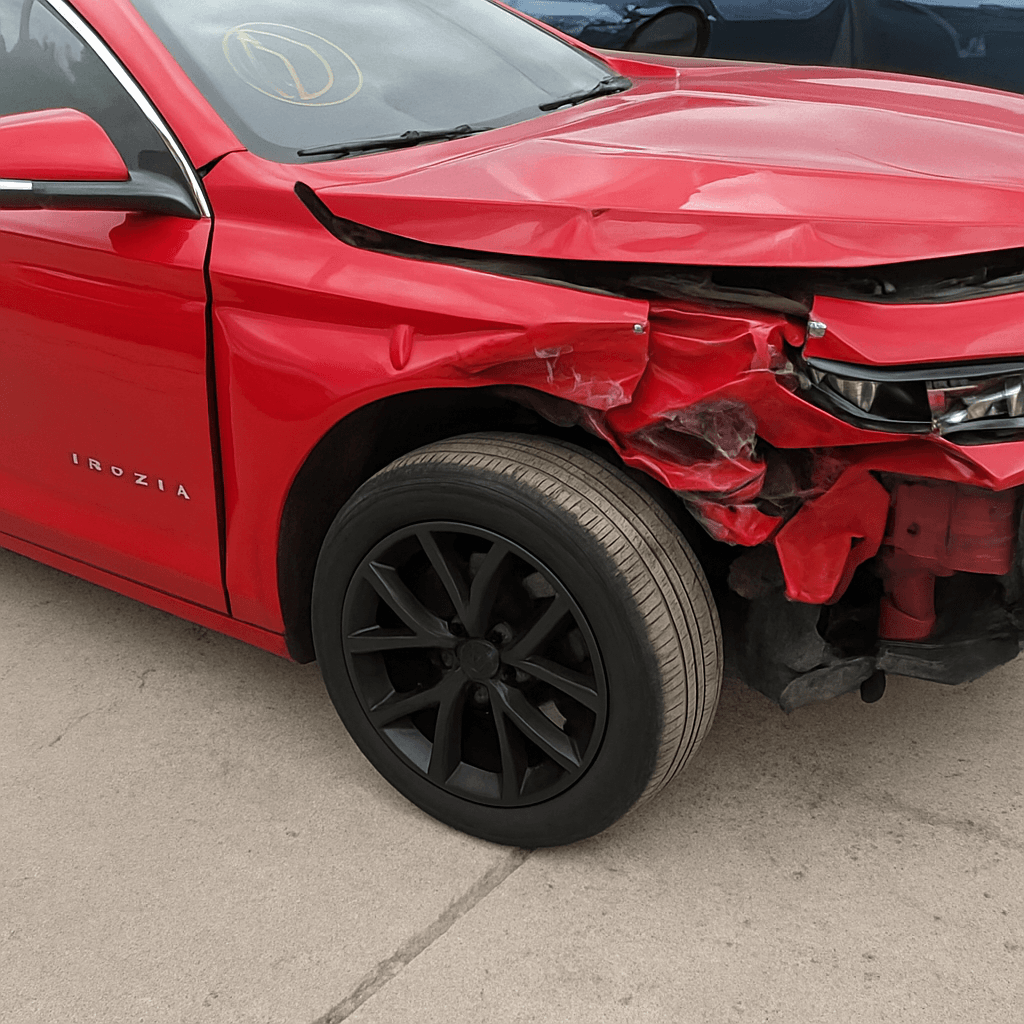
A 2016 sedan in good condition with 68,000 miles might appraise at $6,500 in today's Corpus Christi market. A total-loss claim with a $500 deductible pays $6,000. If collision coverage costs $550 annually, you recover the premium cost after eleven years of claims-free driving if the vehicle is totaled in year twelve. That's the threshold arithmetic: compare annual collision premium to net payout, then decide whether your savings or vehicle-replacement budget can absorb the loss without insurance.
Many retirees discover collision premiums running $400 to $600 per year on vehicles worth $5,000 to $8,000. At that ratio, three years of premiums approaches half the vehicle's value. The coverage still functions, but the economic return diminishes when replacement cost sits within reach of emergency savings and the vehicle's remaining service life is five years or fewer.
Related Articles

Comprehensive Carries a Different Risk Profile Than Collision
Comprehensive coverage handles weather, theft, vandalism, and animal strikes. Corpus Christi sits in a Gulf Coast hail corridor and hurricane evacuation zone. Comprehensive claims in the region spike after named storms and spring hail events. Unlike collision, comprehensive addresses risks you cannot mitigate by driving carefully.
Many retirees drop collision and retain comprehensive because the premium differential is significant and the risk profile differs. Comprehensive often costs $150 to $250 annually with a low deductible, while collision runs two to three times that amount. If your vehicle parks in a carport or garage and you rarely drive during severe weather, comprehensive may still justify its cost where collision does not.
The judgment call: can you replace the vehicle without financial hardship if it's totaled by hail or flood? If yes, and you're comfortable self-insuring weather risk, drop both. If weather risk keeps you awake and replacement savings are thin, comprehensive alone may fit. There's no universal answer, only your specific vehicle value and savings position.
Carriers Writing in Texas
25
Twenty-five carriers confirmed writing auto insurance in Texas offer online quotes or broker access. Not all price liability-only the same way. Some carriers penalize liability-only policies with higher per-coverage rates; others price them neutrally. Comparing three to five carriers clarifies which treats retirees dropping collision most favorably.
Carrier licensure verified via state filings
What Happens at Renewal When You Drop Collision
Dropping collision mid-term usually triggers a pro-rated refund for the unused portion of the six-month term. Most carriers allow the change by phone or online portal. You'll receive a revised declaration page showing liability and comprehensive only, if you retained it, and the new premium total. The change takes effect the day you request it, not at the next renewal.
One failure mode competing articles omit: some carriers increase the liability-coverage rate when collision is removed, offsetting part of the savings. It's not universal, but it happens. The way to identify it: request a quote for liability-only before you drop collision, then compare the per-coverage rate to your current declaration. If the liability rate rises significantly, that carrier penalizes liability-only policies and you may fare better switching carriers entirely.
Another procedural reality: if you financed gap insurance or an extended warranty tied to comprehensive and collision coverage, verify those contracts before making changes. Some gap policies require specific coverage levels to remain active, though most retirees with paid-off vehicles no longer carry gap coverage.
Texas does not impose a coverage-lapse penalty when you drop collision or comprehensive, only when you drop liability coverage or allow the policy to cancel for non-payment. Liability coverage must remain continuous to avoid registration suspension under the state's TexasSure monitoring system. Collision and comprehensive are invisible to the state.
Medical Payments Coverage Is a Separate Decision Often Buried in Full-Coverage Quotes
Medical payments coverage pays your and your passengers' medical bills after an accident regardless of fault, up to the policy limit, usually $1,000 to $5,000. Texas does not require it. Many retirees carry it without realizing it because it was included in the full-coverage package their agent sold them years ago.
If you're enrolled in Medicare Part B, Medicare covers accident-related injuries as secondary after your auto medical payments coverage exhausts. The coordination-of-benefits question: is paying $40 to $80 annually for $2,500 in medical payments coverage redundant when Medicare would cover the same bills? For many retirees, the answer is yes, but the calculus shifts if you frequently carry passengers not enrolled in Medicare or if you want first-dollar coverage without Medicare deductibles and coinsurance applying.
Review your current declaration page. If medical payments coverage appears and you don't remember adding it, ask your carrier what removing it saves. The premium reduction is modest, but modest reductions compound when you're trimming multiple optional coverages simultaneously.
Compare Carriers That Price Retiree Profiles Favorably Before You Drop Coverage
The action step: obtain your vehicle's current market value from an appraisal tool or recent comparable sales. Calculate your annual collision and comprehensive premiums separately. If collision premium exceeds 10 percent of vehicle value, the math favors dropping it unless replacement savings are unavailable. Then compare at least three Texas carriers writing liability-only or liability-plus-comprehensive policies to confirm you're not leaving savings on the table by staying with your current insurer after the coverage change.
State Farm, USAA, Geico, and Progressive all write standard and preferred-tier auto policies in Texas and offer online quoting for retirees. Acceptance, Dairyland, and GAINSCO serve non-standard markets but also quote retirees with clean records. Request quotes specifying liability at or above state minimums, comprehensive if you're retaining it, and medical payments only if Medicare coordination makes sense for your household. The quote comparison clarifies whether your current carrier prices the reduced coverage competitively or whether switching after dropping collision produces compound savings.